- Accuracy of Slice thickness
- Accuracy of Operating Potential
- Accuracy of Timer
- Total filtration
- Linearity of mA/mAs loading Stations
- Consistency of radiation output
- Radiation dose test
- CTDIw for Head Phantom
- CTDIw for Body Phantom
- Low contrast resolution
- High contrast resolution
- Radiation leakage level from X-ray tube housing
- Area Surveillance
COMPUTED TOMOGRAPHY EQUIPMENT
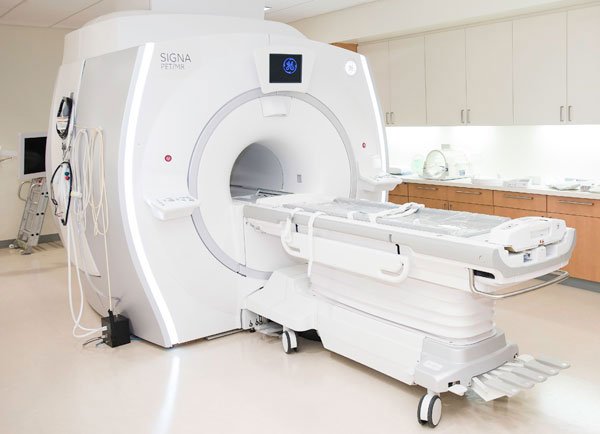
The use of CT equipment has increased many-fold during the past decade. The CT equipment has a higher radiation hazard potential as compared to the general X-ray equipment. Owing to this reason, a greater amount of discretion is required while prescribing/ performing CT scans.
Toggle title
WHAT THE PUBLIC NEED TO KNOW:
- Get CT scans done only in hospitals/facilities having licence from AERB.
- Do not crowd the room where X-ray is taken. Wait for your turn.
- Co-operate with the Technologist, to avoid repeat CT-scans.
- Always wear a lead apron, if you need to assist the patient during CT examination. In no case pregnant woman should assist the patient during exposure.
- Female patient, if pregnant, must inform the CT Technologist so that necessary precaution can be taken during CT examination.
- Carry your old X-ray/ CT records.
WHAT THE PERSONNEL (DOCTORS, RADIOGRAPHERS) WHO ARE OPERATING THE EQUIPMENT NEED TO KNOW:
- All personnel associated with the use of the CT-Scan equipment, shall attend the training sessions provided by the application specialist of the company and incorporate in practice all the radiation safety measures provided by design, in the equipment.
- Always work from the control room.
- Always use the TLD at chest level while CT unit is being operated.
- Do not allow any person, other than the patient, inside the CT-scan room.
- CT-scan doors (preferably with automatic closure) must be lead lined with 1.5 mm lead equivalent and closed during exposures.
- Ensure that Lead apron, with minimum 0.25 mm lead equivalent, is worn by the person assisting an infirm patient during exposure.
- Shall always use the paediatric protocols of exposures, while exposing child patients.
WHAT THE PUBLIC NEED TO KNOW:
- Get CT scans done only in hospitals/facilities having licence from AERB.
- Do not crowd the room where X-ray is taken. Wait for your turn.
- Co-operate with the Technologist, to avoid repeat CT-scans.
- Always wear a lead apron, if you need to assist the patient during CT examination. In no case pregnant woman should assist the patient during exposure.
- Female patient, if pregnant, must inform the CT Technologist so that necessary precaution can be taken during CT examination.
- Carry your old X-ray/ CT records.
WHAT THE OWNER/ EMPLOYER/ RADIATION SAFETY OFFICER NEED TO KNOW:
- Only AERB Type approved CT equipment shall be installed /used.
- AERB licence shall be displayed at prominent place near the CT room for public information.
- The couch shall be placed such that it enables the operator to complete view of the patient from the control room window.
- Quality Assurance tests of the CT-scan equipment is carried out periodically and after any maintenance and the records thereof are maintained.
- At least one lead apron (0.25 mm lead equivalent) shall be available.
- Lead apron(s) shall be stored either on a hanger or on a flat surface without crumpling.
- Consistency of lead aprons shall be checked once in two years. Qualitative check can be done by taking radiograph of lead aprons.
- Shall ensure that the application specialists demonstrate all radiation safety features provided by design, in the equipment.
- Charts of standard exposure parameters to achieve good image quality should be prepared for pediatric and adult patients separately and displayed at a prominent location such as control console.
- TLD badges are provided to all the operators and workers involved during CT examination.
- During non-working hours, TLD cards must be stored along with Control TLD card outside the CT room (in a radiation free area).
- The owner shall ensure that the operator of the CT equipment is well conversant with clinical requirements of the examinations.
- Radiation symbol and warning placards in local languages are placed outside the X-ray room door.
- Routine maintenance of the CT equipment is carried out and record thereof is maintained.